Frequent power cuts
Maintenance shutdowns, summer transformer faults and cyclone outages stop bothering you.
Cut your electricity bill with net metering and keep fans, lights, Wi-Fi and the fridge running through power cuts, all from one solar system.
Get a hybrid system sized for your backup needs
A hybrid system stays connected to the grid like an on-grid system, so surplus units are credited through net metering. It also has a battery and a hybrid inverter. When TNPDCL supply fails, the inverter switches your essential circuits to the battery in milliseconds, and the sun recharges it the next morning, even if the grid is still down.
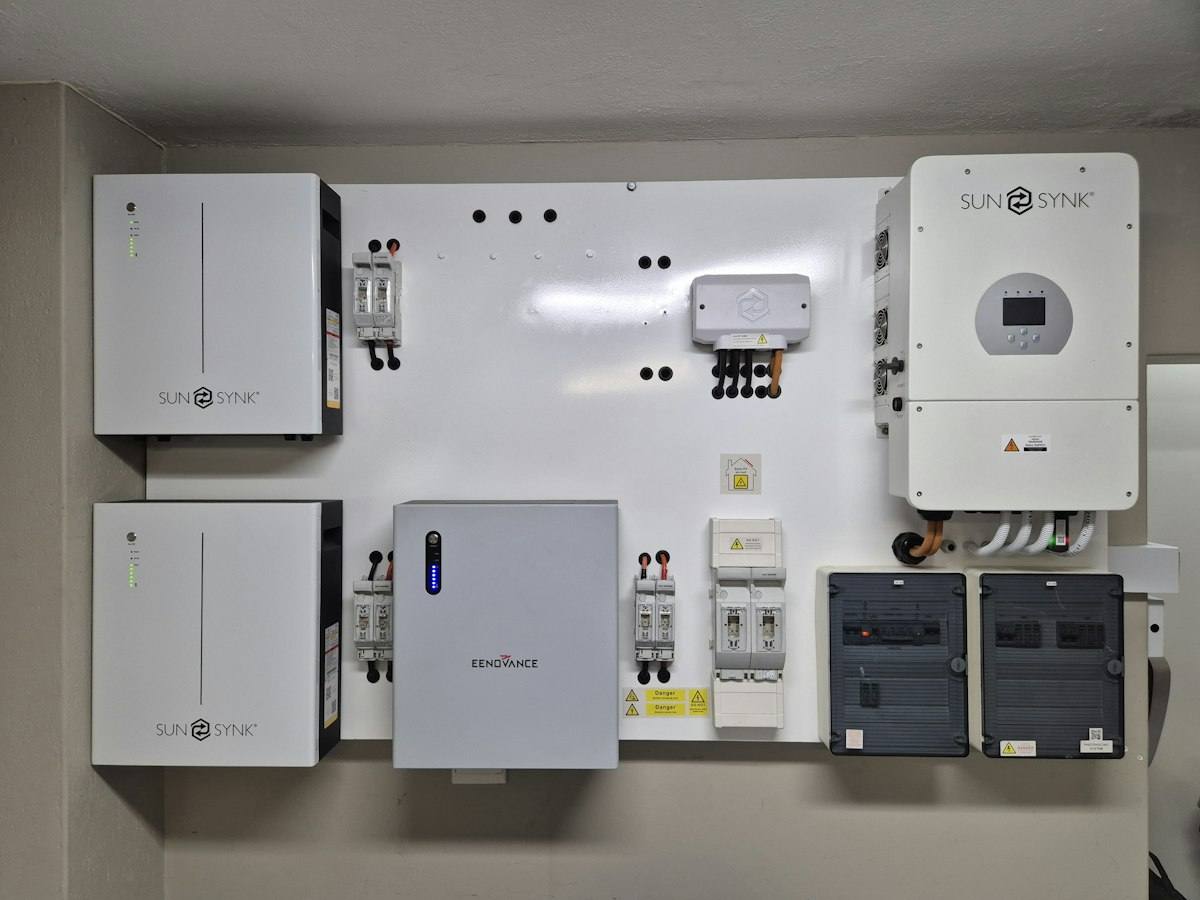
Solar first, battery next, grid last, and backup the moment the power goes.
Maintenance shutdowns, summer transformer faults and cyclone outages stop bothering you.
Keep Wi-Fi, laptops and lights on through outages, without a noisy generator.
Fans and essential appliances keep running when it matters most.
Upgrade worn-out lead-acid batteries to a solar-charged lithium system.
Billing systems, lights and refrigeration stay on so business doesn't stop.
Start with a hybrid-ready inverter today and add more battery later.
Tier-1, DCR-certified mono PERC or TOPCon panels with a 30-year performance warranty.
Manages solar, battery and grid together, with automatic backup switching and Wi-Fi monitoring.
Compact, maintenance-free storage with 4,000–6,000 cycles and 80–90% usable capacity.
Separate backup circuit for essential loads, surge protection, earthing and lightning arrester.
TNPDCL application, net meter and subsidy filing for the eligible solar part, all handled for you.
Hot-dip galvanised structures for coastal wind loads; battery placed in a shaded, ventilated, flood-safe spot.
Size the battery for your essential loads, not the whole house. Your engineer confirms the exact design after the free survey.
| Essential loads on backup | Approx. load | Solar size | Battery (lithium) | Backup time |
|---|---|---|---|---|
| 4 fans, 6 LED lights, Wi-Fi, TV | ~400 W | 3 kW | 2.5 kWh | ~5 hours |
| + refrigerator | ~600 – 700 W | 3 – 5 kW | 5 kWh | ~6 hours |
| + water pump, laptops | ~1 kW | 5 kW | 5 – 7.5 kWh | ~4 – 6 hours |
| + one 1.5-ton inverter AC | ~2.2 kW | 5 – 6 kW | 10 kWh | ~4 hours |
Indicative only. ACs, geysers and induction cooktops need much more storage, so most homes keep them off the backup circuit. Read our solar + battery guide for Tamil Nadu power cuts for costs and battery choices.
Not sure which is right for you? Here's how the three system types compare.
| On-grid | Off-grid | Hybrid | |
|---|---|---|---|
| Connected to the grid | Yes | No | Yes |
| Battery | No | Yes (essential) | Yes |
| Power during outages | No (shuts down for safety) | Yes | Yes, for backed-up loads |
| Net metering | Yes | No | Yes |
| PM Surya Ghar subsidy (homes) | Eligible | Not eligible | Ask us: depends on configuration |
| Upfront cost | Lowest | Highest | Medium–high |
| Best for | Most city homes & businesses with reliable grid | Remote sites, farms, no or very weak grid | Homes & shops with frequent power cuts |
Compare in detail: On-Grid Solar · Off-Grid Solar · Solar Calculator