Remote homes & farmhouses
Where a grid connection is unavailable or very expensive to extend.
Generate and store your own electricity with solar panels and batteries. Ideal where grid power is unavailable, unreliable or costly to extend.
Get a battery system sized for your site
An off-grid system isn't connected to the electricity grid. Solar panels charge a battery bank during the day, and an off-grid inverter supplies your appliances from the panels and the batteries, day and night. Because everything you use must come from your own generation and storage, the system is sized carefully around your daily load.
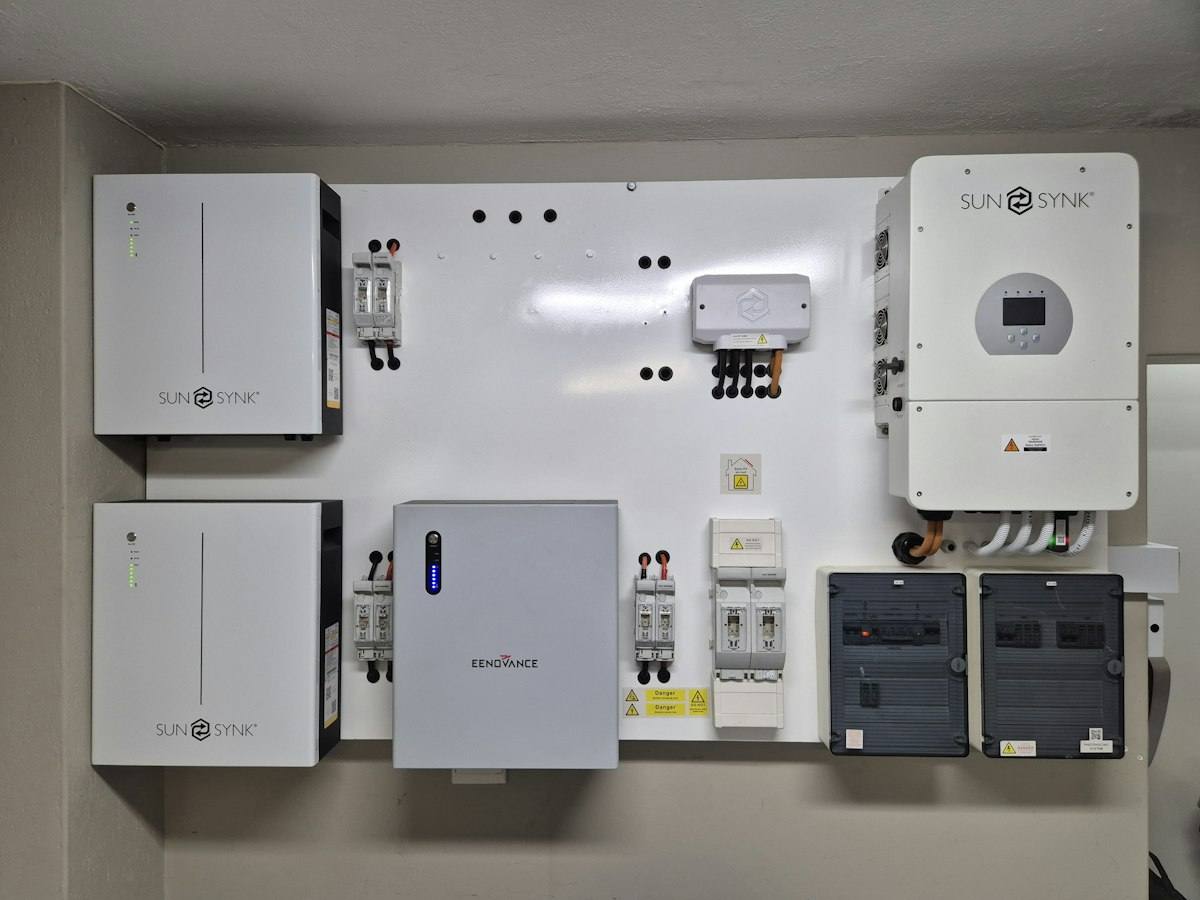
Generate by day, store for the night, and stay independent of the grid.
Where a grid connection is unavailable or very expensive to extend.
Run pumps, lights and cold storage away from the grid.
Areas with hours-long daily outages where backup is essential.
Temporary or mobile sites that need clean, quiet power.
Critical loads that must run around the clock.
Cut fuel costs, noise and fumes with solar + storage.
A rough guide for homes. We size every system to your actual appliances and backup hours.
| Typical use | Daily need | Solar size | Battery (usable) |
|---|---|---|---|
| Lights, fans, Wi-Fi, TV | 3–4 units | 1–2 kW | 2–3 kWh |
| + fridge, mixer, washing machine | 6–8 units | 2–3 kW | 5–7 kWh |
| + one 1.5-ton inverter AC (a few hours) | 10–14 units | 4–5 kW | 10–12 kWh |
| Farm pump / small business | Varies | Custom design after site survey | |
Indicative only. Battery size depends on backup hours, appliance ratings and days of autonomy you want for cloudy weather.
Not sure which is right for you? Here's how the three system types compare.
| On-grid | Off-grid | Hybrid | |
|---|---|---|---|
| Connected to the grid | Yes | No | Yes |
| Battery | No | Yes (essential) | Yes |
| Power during outages | No (shuts down for safety) | Yes | Yes, for backed-up loads |
| Net metering | Yes | No | Yes |
| PM Surya Ghar subsidy (homes) | Eligible | Not eligible | Ask us: depends on configuration |
| Upfront cost | Lowest | Highest | Medium–high |
| Best for | Most city homes & businesses with reliable grid | Remote sites, farms, no or very weak grid | Homes & shops with frequent power cuts |