How to Clean & Maintain Solar Panels
How often to clean your panels, the right way to do it, the mistakes that damage them, and a simple yearly maintenance checklist.
 Rainbow Solar Energy Team
5 min read
Updated
Rainbow Solar Energy Team
5 min read
Updated
In this article
Key takeaways
- Dust and bird droppings can cut output by 5–15%, more in very dusty spots.
- In Tamil Nadu, clean panels every 2–4 weeks; more often near main roads, construction or the sea.
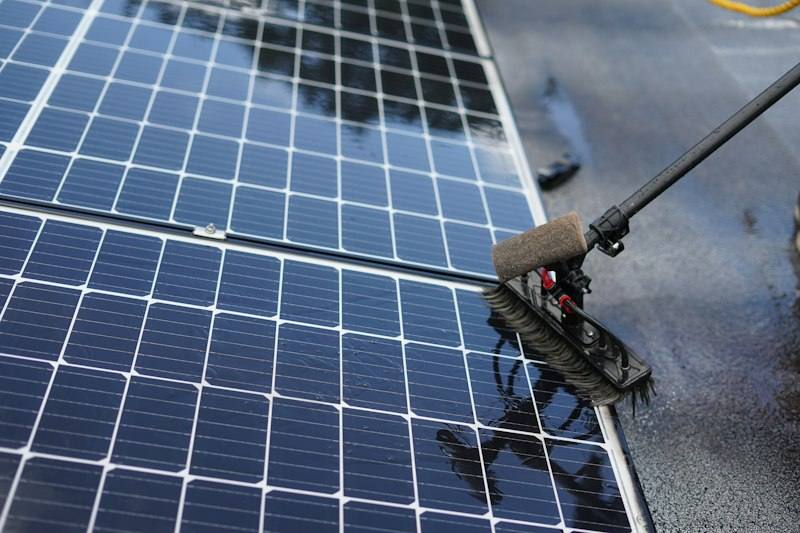
- Use soft water and a soft brush or mop, early in the morning. No detergents or pressure washers.
- Get a yearly electrical check of the inverter, wiring and earthing.
Solar needs very little maintenance, but regular cleaning is the easiest way to protect your savings. Here's how to do it safely.
How often should you clean?
| Location | Cleaning frequency |
|---|---|
| Most residential areas | Every 3 – 4 weeks |
| Near main roads or construction | Every 1 – 2 weeks |
| Coastal areas (salt spray) | Every 2 weeks |
| Near trees (leaves, bird droppings) | Every 2 weeks, plus spot cleaning |
| Monsoon season | Less often: rain helps, but check for patches |
Tip: compare your monitoring app's daily units on similar sunny days. A steady 10% drop usually means it's time to clean.
How to clean solar panels: step by step
- Pick the timeEarly morning or evening, when panels are cool. Cold water on hot glass can stress it.
- Stay safeDon't stand or walk on the panels. Use a long-handled mop from the walkway or terrace.
- RinseWet the panels with clean, soft water to loosen dust.
- Wipe gentlyUse a soft sponge, microfibre mop or soft brush. Soak bird droppings first, then wipe.
- Final rinseRinse off loosened dirt. Avoid leaving hard-water spots.
Mistakes that damage panels
- Pressure washers, which can damage seals and micro-crack cells.
- Detergents, soap or chemicals, which leave residue and can damage the anti-reflective coating.
- Hard or salty borewell water, which leaves white scale that blocks light.
- Abrasive scrubbers or steel wool, which scratch the glass.
- Walking on panels, which causes invisible micro-cracks and lowers output.
Yearly maintenance checklist
| Check | Why it matters |
|---|---|
| Inverter display and error log | Catches faults before they cost you units |
| DC and AC connections, MC4 connectors | Loose or burnt connectors reduce output and are a fire risk |
| Earthing and lightning arrester | Protects people and equipment, especially before the monsoon |
| Structure bolts and rust | Coastal air corrodes untreated steel |
| Shade from new growth or construction | New shade can cut a whole string's output |
| Monitoring app and Wi-Fi | So you're alerted to drops quickly |
Should you take an AMC?
An annual maintenance contract (AMC) covers scheduled cleaning, a yearly health check and priority breakdown service. It's especially useful if your terrace is hard to access or you'd rather not clean panels yourself. Rainbow Care+ covers performance monitoring, preventive maintenance and priority service, even for systems we didn't install.
Book a cleaning or health check
Our technicians clean, inspect and test your system, wherever it was installed.
Want to know how long your system will last with good care? Read how long do solar panels last.
Written by our solar engineers and subsidy specialists, who design and install rooftop systems for homes, societies and businesses across Tamil Nadu. Figures are indicative and reviewed regularly; your free site survey gives exact numbers for your roof.