Do Solar Panels Work on Cloudy & Rainy Days?
How much output really drops in clouds and monsoon rain, why your yearly savings stay strong, and how panels cope with Tamil Nadu's heat and cyclones.
 Rainbow Solar Energy Team
5 min read
Updated
Rainbow Solar Energy Team
5 min read
Updated
In this article
Key takeaways
- Yes, solar panels work on cloudy and rainy days, but at reduced output.
- Light clouds cut output to about 50–70%; heavy monsoon overcast to about 10–30%.
- Your savings estimate uses the yearly average, which already includes the monsoon.
- Rain actually helps by washing dust off the panels.
Panels generate electricity from light, not heat, and light still reaches them through clouds. What changes is how much. Here is what to expect through a Tamil Nadu year.
Output in different weather
| Weather | Output vs a clear day | 3 kW system, units that day |
|---|---|---|
| Clear, sunny | 100% | 13 – 15 |
| Light or patchy clouds | 50 – 70% | 7 – 10 |
| Overcast | 25 – 40% | 3 – 6 |
| Heavy monsoon rain | 10 – 25% | 1.5 – 3.5 |
Indicative. Panels also respond to reflected and scattered (diffuse) light.
What about the Tamil Nadu monsoon?
Tamil Nadu gets most of its rain from the northeast monsoon, October to December, with a smaller share from June to September. Generation is lower for those weeks, but March to May produces more than average. With net metering, the summer surplus carries forward, so your bill stays low across the year.
Does extreme heat reduce output?
Surprisingly, yes. Panels lose about 0.3–0.4% of output for every °C above 25°C cell temperature. On a 40°C Tamil Nadu afternoon, panels can run 20–25°C hotter than the air. Raised structures with airflow underneath and newer TOPCon panels (with a better temperature coefficient) help. See Mono PERC vs TOPCon vs bifacial.
Will panels survive cyclones and heavy rain?
Quality panels are tested for heavy wind and snow loads and are waterproof (IP67/IP68 junction boxes). The weak point is usually the structure. We use hot-dip galvanised steel anchored for coastal wind loads, which is essential in cyclone-prone Tamil Nadu.
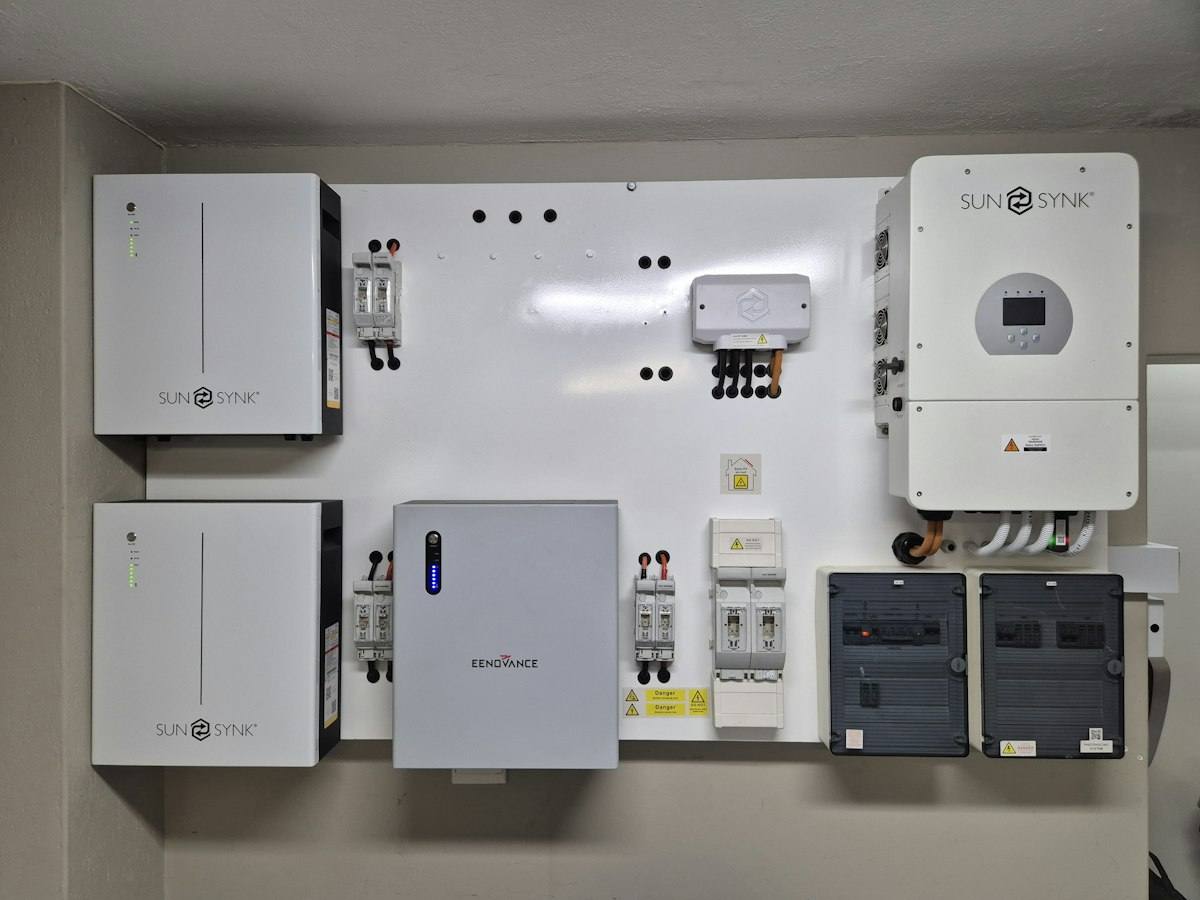
During a storm, you don't need to do anything. If water floods your inverter or battery area, switch off the AC isolator and call us before restarting.
Want power during storm outages?
Storms often bring power cuts, and on-grid systems switch off when the grid fails. A battery lets you keep essentials running: read solar + battery for Tamil Nadu power cuts.
See your year-round savings
We factor in your area's monsoon and summer sunshine in a free, written estimate.
Written by our solar engineers and subsidy specialists, who design and install rooftop systems for homes, societies and businesses across Tamil Nadu. Figures are indicative and reviewed regularly; your free site survey gives exact numbers for your roof.